
Uncategorized
Is CBD Legal in the US? Understanding the Current Legal Landscape
Aug
Cannabidiol, commonly known as CBD, has surged in popularity in recent years, touted for its potential health benefits—from easing anxiety to alleviating chronic pain. But with this booming market comes a common question: Is CBD legal in the United States? The answer isn’t as straightforward as many hope, as it depends on various factors including the source of the CBD, state regulations, and intended use.
Federal Legality of CBD
The 2018 Farm Bill marked a major turning point for CBD legality in the United States. This legislation legalized hemp-derived CBD products containing less than 0.3% THC on a federal level. THC, or tetrahydrocannabinol, is the psychoactive compound found in cannabis that produces a “high.”
In simple terms:
- Hemp-derived CBD with <0.3% THC → Legal federally
- Marijuana-derived CBD or products with >0.3% THC → Illegal federally, though some states have exceptions
It’s important to note that while CBD itself may be federally legal, the FDA regulates CBD as a supplement and food additive. This means companies cannot make unverified health claims, and CBD cannot be marketed as a cure for diseases.
State-by-State Regulations
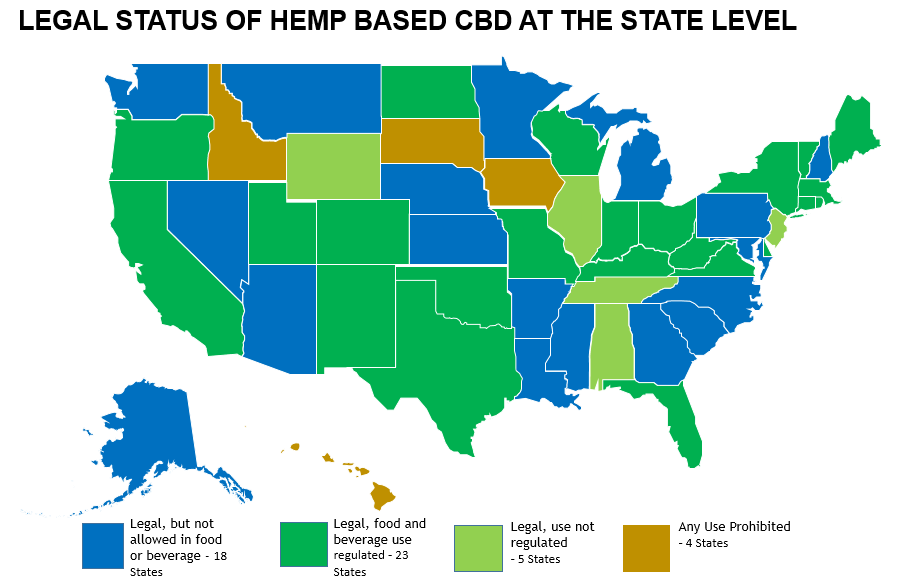
Even though federal law permits certain forms of CBD, individual states have the authority to regulate or restrict CBD products. For instance:
- California, Colorado, and Oregon: Hemp-derived CBD is widely legal and available in stores.
- Idaho, South Dakota, and Nebraska: CBD legality is more restrictive; some forms may be illegal.
- Other states: Many allow CBD with varying restrictions on THC content, age requirements, and sale locations.
Because laws vary so widely, it’s crucial to check your state’s current regulations before purchasing or using CBD products.
Forms of Legal CBD
CBD comes in multiple forms, and legality may vary depending on the type:
- CBD oils and tinctures: Widely available and usually legal if derived from hemp.
- CBD edibles and gummies: Legal federally but sometimes restricted in certain states.
- Topicals (creams, balms, lotions): Generally legal and often less regulated.
- CBD in beverages or food products: May face FDA restrictions.
Potential Risks of CBD Legality
Even though CBD is legal in many areas, there are risks:
- Products may contain higher THC than advertised, which can cause legal issues.
- Some CBD supplements may be mislabelled or contain contaminants.
- Federal and state laws can change quickly, impacting legality.
So, is CBD legal in the US? The short answer: Yes—if it’s derived from hemp and contains less than 0.3% THC. However, the long answer is nuanced, with variations at the state level and regulations regarding product claims. Staying informed about both federal and local laws is essential for anyone looking to use or sell CBD products legally.
National Conference of State Legislatures (NCSL) – State Medical Cannabis Laws
This resource offers an updated map and detailed information on medical cannabis laws across all U.S. states, helping readers understand state-specific regulations.
🔗 https://www.ncsl.org/health/state-medical-cannabis-laws
Extract Labs – Is CBD Legal? Complete Guide to CBD Laws by State
Offers a detailed guide on CBD laws as of 2025, highlighting variations in regulations across different states.
🔗 https://www.extractlabs.com/cbd-industry/is-cbd-legal-state-laws-2025/
